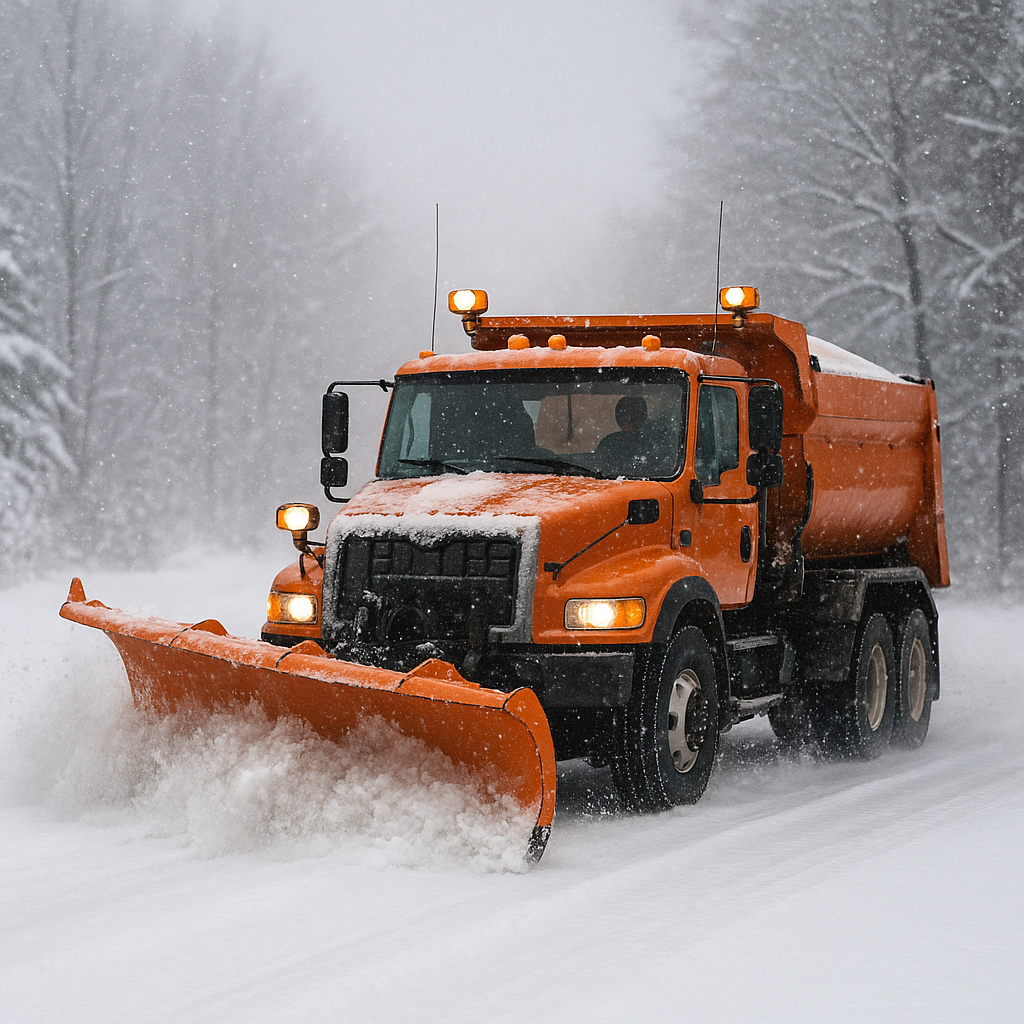
One of the most important steps in the snow plowing processis piling the snow in a safe location. You should avoid letting snow accumulatein any of the following locations:
Because there are so many locations to avoid piling snow, itis important to plan where you will divert the snow before beginning the job.It is often best to pile snow out of the way on a paved surface rather than ingrassy areas, where the heavy snow load could damage the turf.
In parking lots, you may designate a few parking spaces aspiling zones. You can also check with the property owner to see if they haveany preferences.
Plowing with a storm rather than after thestorm ends can help reduce the labor involved in snow removal and prevent roads or driveways from becoming overlyhazardous. Removing the snow in layers can also prevent unnecessary strainon equipment.
Your timeline for snow clearing depends on the severity ofthe storm and the amount of snow expected. It may be a good idea to beginplowing after two or three inches have accumulated, and then repeat the jobevery four to six inches thereafter.
It's always best to determine a plowing pattern beforestarting a job, especially if you are plowing a wide, open space.
Creating a plan that maximizes the amount of forward drivingtime allows you to roll and throw the snow ahead and to the side, creating aclear path. This reduces drag and minimizes the amount of time you need tospend looking behind you, which can be dangerous in already low-visibilityconditions.
Aim to plow in a straight line as much as possible and pushthe snow from the middle to the outside edges of the blade.
Backdragging is a snow plowing technique that involvespulling snow backward rather than pushing it forward with the blade. Thistechnique is generally best for tight areas, such as near garage doors orbuildings, where plowing forward wouldn't allow you to effectively reach all ofthe snow.
Backdragging is best performed with either a back drag kitor plows that are designed to allow for this maneuver. You shouldn't attemptbackdragging without knowing how your plow would handle this.
Proper snow plow safety involves raising and lowering theblade according to the type of surface you are plowing. For loose surfaces,such as dirt, rock, or gravel, raising the blade can help you avoid scrapingthe surface and moving the rock along with the snow. For flat, hard surfaces,lowering the blade can ensure that you plow as close to the surface aspossible.
Snow plowing is one of the crucial tasks involved ineffective winter maintenance. If you're looking for a company that employs thebest snow plowing techniques, Tatum Lawn Care LLC is a reliable option toconsider.
We provide year-roundseasonal care, from lawn care in the spring, summer, andfall, to snow management in the winter. Request an estimate for snow removaltoday by calling 509-765-4000.


Discover valuable tips, expert advice, and industry insights on commercial cleaning, floor care, and creating a healthier, more productive space. Stay informed with our latest posts!
See All Blogs

Proudly serving Moses Lake and surrounding areas with expert lawn care and landscaping solutions. Explore our service areas to see how we can help you!
Learn more
.avif)